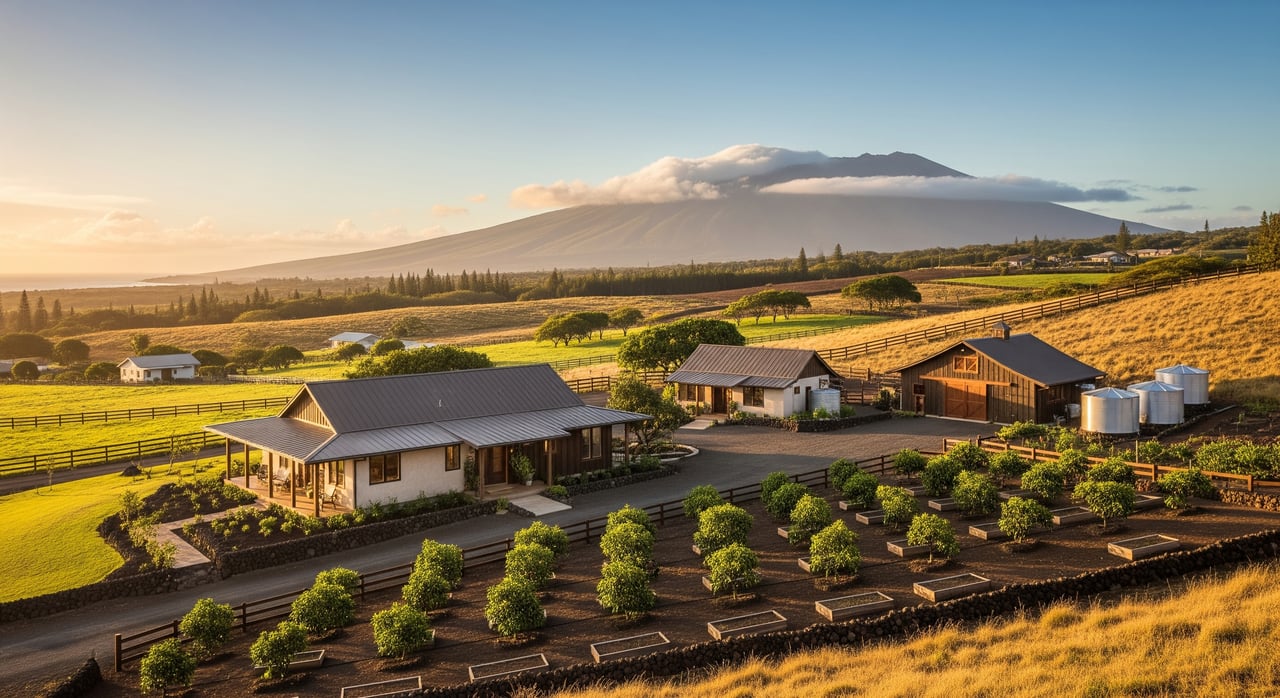
You fell in love with the open skies and cool air of Kula and now you are looking at agricultural land with visions of citrus trees, a barn, and maybe a cottage for family or farm help. Then you hear about farm plans, two dwellings, CPRs, and overlapping State and County rules. It can feel complicated fast. This guide breaks down the essentials for Kula buyers so you understand what is possible, what to verify, and how to move forward with confidence. Let’s dive in.
How zoning works in Kula
Kula parcels sit under two layers of control. First is the State Land Use System, which classifies land into Urban, Agricultural, Conservation, or Rural. Many Upcountry properties are in the State Agricultural district, and some carry conservation overlays. Second is Maui County zoning, which sets parcel-level use, setbacks, dwelling rules, and subdivision standards.
This matters because County Agriculture zoning may allow certain uses, yet State designations or special overlays can still limit what you can build or how you can use the land. In Kula, you are on the flanks of Haleakalā, so you will often encounter slope limits, watershed protections, and cultural or environmental sensitivity areas.
For verification and approvals, plan to speak with the Maui County Planning Department, the Maui County Real Property Tax Office, the State Land Use Commission, the Maui Department of Water Supply, and the Hawai‘i Department of Health for wastewater. These agencies help confirm zoning, water availability, septic requirements, and any State-level constraints.
Farm plans and why they matter
A farm plan is a written description of your on-site agricultural activity. It explains how the land will be used for farming, including crops or livestock, acreage in production, water source, needed infrastructure, and who runs the operation. County planners use farm plans to confirm that a property is actively used for agriculture.
This becomes critical when you seek a second dwelling on agricultural land. In many cases a second dwelling, often called a farm dwelling, may be considered if the agricultural operation justifies on-site housing for owners, managers, or full-time workers. Your farm plan helps show why the housing is necessary and how the land can support it.
What a strong farm plan includes
- Parcel size and how much acreage will be in active agriculture
- Types of production such as orchard, market vegetables, livestock, nursery, or apiary
- Expected yields and, if available, projected gross agricultural income
- Labor needs and why on-site housing is required for full-time or seasonal workers
- Water sources and irrigation strategy, such as County meter, well, or catchment
- Planned infrastructure such as barns, fencing, storage, and packing areas with a timeline
- Biosecurity, erosion control, and waste handling measures
- Marketing and distribution plan, such as farmstand, CSA, or wholesale accounts
- Operator experience or management details
Farm plans are typically submitted with building permit applications or to qualify for farm dwellings or exemptions. They do not create rights beyond what zoning allows, but they are key evidence for County staff. Vague plans or plans that rely on speculative future income are common pitfalls. Also remember that property tax classification as agricultural is a separate process handled by the County tax office with its own income and documentation rules.
Can you build two dwellings on ag land?
Often, a second dwelling is possible when the County finds a justified agricultural need and when all other requirements are met. That includes water availability, septic and wastewater approvals, setbacks, slope and grading rules, and a farm plan that shows why on-site housing is necessary for the operation. The County will evaluate the specifics of your parcel and your plan.
A farm plan does not guarantee a second dwelling. It supports a request within the limits of County Agriculture zoning and State designations. Start your conversations early with a County planner to understand what documentation is needed for your particular parcel.
What determines your developable area
Your developable area is the portion of the parcel where you can place structures after accounting for slopes, setbacks, environmental buffers, utilities, and site stability. In Kula, the following factors commonly shape where and whether you can build.
Physical constraints
- Topography and slope can limit both practical and permitted buildable space. Steeper slopes require more robust grading and erosion control and can trigger additional permits.
- Soil stability and drainage may add setbacks or no-build zones, especially near gulches and runoff paths.
Regulatory and environmental constraints
- State and County setbacks apply along roads, gulches, and conservation buffers, which can shrink the usable footprint.
- Environmental and cultural overlays, watershed protections, and archaeological resources can restrict disturbance and trigger extra review.
Utilities and infrastructure
- Water is central. Some properties have a County meter, others rely on wells or rain catchment. Potable water availability can affect permitting and lending, especially for multiple dwellings or commercial-scale agriculture.
- Wastewater and septic solutions depend on soil percolation tests, required separations, and absorption field placement, which directly influence where a home can go.
- Access and roadway improvements, including easements and private road standards, can affect buildable area and costs.
Title and access constraints
- Easements and recorded covenants may carve out parts of the parcel from development or limit uses. Always review the title report for restrictions.
How to verify your buildable footprint
- Order a current boundary survey and topographic map. Ask for any available perc tests, septic plans, and geotechnical reports.
- Request County zoning verification and a zoning or GIS parcel printout that notes setbacks and lot coverage standards.
- Confirm water source and capacity with the Department of Water Supply or obtain well logs and permits for private wells.
- Review all recorded easements and covenants. Ask for any existing farm plans, building permits, and Certificates of Occupancy.
Typical Kula issues to watch
- Limited flat building pads on smaller parcels with steeper terrain
- Seasonal water constraints that make additional dwellings or farm scaling difficult
- Potentially costly grading, retaining walls, and erosion control on sloped sites
CPRs on ag land: what they are and how they work
A Condominium Property Regime, or CPR, is a way to divide fee simple land into separate titled units under state condominium law. Each unit receives its own title while sharing common elements like roads or water systems under an owners association. This is different from a traditional subdivision, though County standards still apply to infrastructure and utilities.
In agricultural settings, CPRs let owners sell parts of a larger parcel without a full lot line subdivision. For example, an 8-acre parcel might be organized into two CPR units, each with its own title, while sharing access or utility systems through the association.
Pros of CPRs
- Can be faster than a full subdivision in certain cases, subject to County review
- Creates marketable units with separate titles, increasing flexibility for sellers and buyers
- Allows shared systems to be managed through an association and clear covenants
Cons and buyer risks
- Lender acceptance varies. Many national lenders and government loan programs have stricter rules for CPR units. Local banks may be more flexible but require thorough documentation.
- Poorly drafted documents can lead to disputes over maintenance, access, and cost sharing.
- County may treat a CPR as a de facto subdivision if used like separate lots and require infrastructure upgrades.
- HOA obligations and special assessments can apply and covenants may limit agricultural uses.
- CPRs do not change zoning or allow you to bypass dwelling counts or minimum lot sizes without County approval.
When a CPR may make sense in Kula
- You plan to market and sell discrete portions of a larger parcel and have lenders open to financing CPR units
- Shared systems like a private road or catchment can be managed under one association with fair cost allocation
- County staff confirm the plan aligns with subdivision standards and required infrastructure
CPR due diligence for buyers
- Obtain the condominium declaration, bylaws, plat, and a pro forma HOA budget
- Confirm multiple lender policies for CPR loans early in your process
- Review County approvals or conditions tied to the CPR and confirm that planned uses align with Agriculture zoning
- Verify access rights and utility allocations, including wells, water meters, and septic systems
Buyer checklist for Kula ag parcels
Gather these documents early, ideally before escrow:
- Title report and all recorded documents, including easements, covenants, and any CPR declaration
- Boundary survey and as-built plan; topographic map if available
- County zoning verification and GIS parcel printout that shows zoning, setbacks, and coverage rules
- Existing farm plan, building permits, Certificates of Occupancy, and septic permits
- Water documentation such as meter availability, well logs, and water rights or permits
- Environmental reports including perc tests, geotechnical, archaeological, or conservation studies
- Property tax classification records and prior tax statements
Ask the listing agent or seller:
- Is there an existing farm plan? Has a farm dwelling ever been approved or denied?
- How many dwellings are currently allowed or historically permitted on this parcel?
- Are there current or historic perc tests, septic permits, or well permits?
- Is the parcel already part of a CPR or are there plans to CPR or subdivide?
- Are there any open permits, code violations, or unpermitted structures?
Ask County staff and lenders early:
- County planner: What dwellings are allowable today and what documents are needed to support a second dwelling or farm dwelling?
- Environmental and Building: What are current septic and stormwater requirements, including slope or grading limits that affect foundations or retaining walls?
- Department of Water Supply: Is potable water available? Are there meter rights, waitlists, or limits that may affect farm scale or multiple dwellings?
- Lenders: Will you lend on ag zoning or CPR units here? What are your underwriting requirements for secondary dwellings or unconventional access and water?
Operational checks during escrow:
- Confirm how any farm plan tied to an existing dwelling was documented and treated by the County
- If a seller proposes a CPR, require a recorded declaration and plat and confirm lender acceptance before closing if financing is needed
- Budget for road, drainage, water, septic, and erosion control upgrades common in Upcountry terrain
Smart next steps
In Kula, success starts with clarity. Confirm your zoning at both the State and County levels, match your development ideas to realistic water and septic capacity, and build a credible farm plan if you aim for a second dwelling. Assemble a team that includes a County planner contact, a surveyor, a real estate attorney, an experienced title company, a local lender familiar with ag and CPR properties, and the Department of Health for wastewater.
Local policy and lender practice can change, and interpretations may vary by planner. Get written guidance where possible and keep your due diligence tight. If you want a design-forward, concierge approach to vetting Kula ag opportunities and aligning them with your lifestyle goals, reach out to me directly at 808.344.4363, or send me an email at [email protected].
FAQs
Can I build a second house on Kula ag land?
- Often possible if the County finds a justified agricultural need and you meet water, septic, setback, slope, and farm plan requirements. Confirm parcel specifics with a County planner.
Do I need a farm plan for a second dwelling in Kula?
- A farm plan is typically used to justify the need for a farm dwelling by showing active agricultural operations and on-site labor requirements. It supports but does not guarantee approval.
Does a farm plan allow me to subdivide my Kula land?
- No. Farm plans support agricultural use and may support a farm dwelling request. Subdivision requires separate County review or a properly executed CPR with any required infrastructure.
Are CPR units easy to finance in Maui?
- Not always. Many national lenders and government programs have stricter rules for CPR units, while local banks may be more flexible. Start lender conversations early.
What limits the buildable area on Kula ag parcels?
- Slope, drainage, setbacks, environmental buffers, easements, water availability, and septic placement typically shape your developable area. Verify with surveys, tests, and County guidance.
Is agricultural property tax classification automatic in Maui County?
- No. Agricultural tax classification is a separate process through the County tax office, usually tied to evidence of agricultural use and sometimes income thresholds.