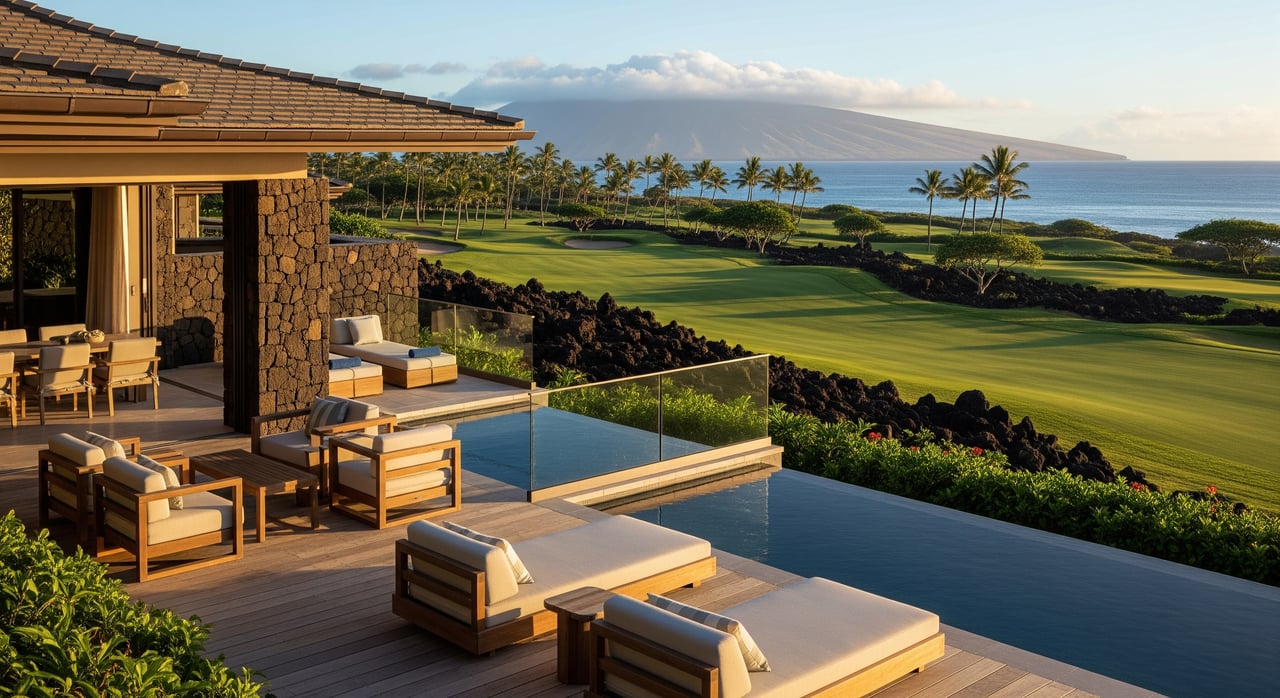
Standing on a Kapalua fairway with the ocean beyond feels effortless. Choosing the right golf-front property is not. You want the views and lifestyle without surprises from wind, cart paths, or HOA rules. In this guide, you’ll learn how to evaluate course-side homes and villas on Kapalua’s Bay and Plantation courses with confidence, from view corridors and microclimate to insurance and resale. Let’s dive in.
Why Kapalua golf-front is unique
Kapalua blends resort energy with residential privacy. The Plantation Course is dramatic and topographically varied, and it hosts The Sentry Tournament of Champions, a high-profile TOUR event that kicks off the PGA calendar each year, which underscores its global standing. You can see the schedule on the PGA TOUR’s page for the event at the Plantation Course. The Bay Course sits closer to the shoreline and often feels more intimate and coastal.
- Explore course overviews and maps on the Kapalua Resort site to orient yourself to each course’s character and hole routing. You can review the resort’s golf pages for an official overview at Kapalua Golf and see the Plantation Course’s tournament profile on the PGA TOUR’s Sentry event page.
Start with views and topography
View quality is a major value driver. Small changes in elevation or setback can make the difference between a full ocean panorama and a partial fairway peek.
- Identify which rooms and lanais orient toward the fairway or ocean.
- Ask for a recent site survey and any topographic map, plus recorded easements.
- Review CC&Rs for any view protection or height limits that preserve corridors.
- Walk the property line and note nearby tree lines that could grow into views.
Understand wind and microclimate
Maui’s prevailing trade winds typically come from the northeast, and Kapalua’s northwest shore location creates local microclimates. Coastal spots near the Bay Course can feel more wind-exposed, while some higher Plantation Course sections may be more sheltered by terrain.
- Visit the property morning, afternoon, and evening to feel real wind patterns.
- Look for salt spray exposure on hardware or glass, and ask how often it needs service.
- Consider how gusts might affect large sliding doors, pool use, and outdoor dining.
- Use regional climate resources like the National Weather Service Honolulu for wind context and NOAA climate summaries at NOAA to understand seasonal patterns.
Measure distance to tees and paths
Proximity to tees, greens, and cart paths shapes daily experience. Ultra-close frontage can be stunning, but it may also mean more voices, early-morning maintenance, and less privacy.
- Ask the HOA or course for maps and the approximate yardage to the nearest tee, green, and cart path.
- Stand on the lanai and listen during early morning and late afternoon when play and maintenance are active.
- Note any walking paths used by resort guests that pass near your lot line.
Plan for errant balls and safety
Errant balls are more likely near tee boxes, par-3 holes, doglegs, or sloping fairways that funnel shots. You want both realistic expectations and clear mitigation options.
- Request any incident logs or insurance claim history from the seller or HOA.
- Verify if laminated or tempered glass is installed where exposure is highest.
- Ask what screening, landscape berms, or plantings are allowed for protection.
- Confirm your insurance will cover repeated golf ball damage to exterior glass.
Check privacy and activity levels
Cart traffic, maintenance crews, and occasional events can influence privacy and noise.
- Visit on different days and at varied times, including weekends and early mornings.
- Observe how close carts travel to lower-level lanais.
- Ask the HOA about who may access the course-side path network and what rules apply to non-residents.
- Request the course’s event and tournament calendar to anticipate peak activity. The event schedule for the Plantation Course’s PGA TOUR stop is published on the PGA TOUR’s Sentry event page.
Track light and solar exposure
Light and shade shape how you live outside and how hard your cooling system works.
- Watch how shadows from course trees move across your lanai and pool.
- Note orientation. West-facing lanais capture sunsets but may add afternoon heat.
- Consider pergolas or solar shading where allowed by the HOA guidelines.
Read the rules: HOA and approvals
The association’s documents often decide what you can change, how you can rent, and what projects need approval. Read them in full before you write an offer.
Design controls and rental rules
- Review CC&Rs, bylaws, architectural guidelines, and rental restrictions.
- Look for rules on fencing, screening, plant species, exterior colors, and roofing.
- Ask for current budgets, reserve studies, and minutes to spot upcoming assessments.
Landscaping, irrigation, and chemical use
- Understand whether course irrigation or maintenance crews need access at your edge.
- Ask for chemical application schedules, product labels, and buffer zone policies.
- Confirm if there is notification before spraying near your property line.
Coastal and hazard checks
Bay Course proximity to the shoreline means you should evaluate coastal hazards carefully, including erosion, storm surge, and sea-level rise.
- Review Maui County shoreline setback policies and planning resources through the Maui County Planning Department.
- Check sea-level rise tools maintained by the University of Hawai‘i and the State at the Hawai‘i climate portal.
- Confirm flood and tsunami designations via county hazard resources, and ask whether flood insurance is required.
Know who owns and manages the course
Ownership structures influence maintenance standards and how responsive management is to mitigation requests.
- Ask whether the course is operated by a resort entity or tied to a homeowners association.
- Request any long-term plans for course renovations, routing changes, or irrigation upgrades that may affect views or access.
- Identify easements that cross your lot for maintenance or access.
Due diligence checklist
Use this as your on-island script when you tour and before you go under contract.
- CC&Rs, bylaws, architectural guidelines, current budget, reserve study, and the last 12 months of board minutes.
- Course maps showing tees, greens, cart paths, and maintenance routes.
- Property survey, recorded easements, and measurements to the nearest tee or cart path.
- Seller disclosures, including any golf ball incidents or insurance claims.
- Standard inspections plus termite, glass and glazing evaluation, and geotechnical where slope or coastal proximity is a concern.
- HOA and course maintenance details, including chemical use schedules and notification policies.
- Insurance review for golf ball, windstorm, and flood coverage.
- Preliminary approvals for any planned screening, fencing, or landscape berms.
Insurance and risk management
Your policy should match the site. Course-side homes may have unique exposures.
- Verify coverage for repeated golf ball damage and exterior glass replacement.
- Ask about any past claims related to wind, flooding, or storms.
- For shoreline-adjacent properties, confirm flood requirements and wind coverage specifics with a Hawai‘i-savvy broker.
Value, rental, and resale
Golf-front plus ocean view usually commands a premium, but nuisance exposure and HOA limits can change the calculus.
- Communities with strict design standards often retain a cohesive look that many buyers value.
- Heavy screening or highly customized solutions may reduce marketability if they impact views.
- Rental potential depends on each community’s rules, so verify what is allowed and how enforcement works.
- For broader market context and absorption trends across West Maui, consult the Realtors Association of Maui for current reports.
Design-forward upgrades that work in Kapalua
Thoughtful materials and landscape choices can elevate livability and reduce maintenance.
- Install laminated or tempered glass on exposed elevations and consider removable exterior screens for storms or special events.
- Use corrosion-resistant finishes, such as stainless steel or powder-coated metals, to handle salt and wind.
- Layer dense, HOA-approved plantings to soften views from cart paths and reduce ball velocity without creating visual clutter.
- Position outdoor rooms to catch sunset views while finding shelter from the prevailing winds.
Your next steps
Choosing the right golf-front home at Kapalua is about aligning the course experience with your lifestyle. When you pair a clear checklist with local expertise, you protect your view, your privacy, and your long-term value. If you want a second set of eyes on a specific unit or lot, reach out for a tailored walkthrough of documents, microclimate, and design options.
Ready to evaluate Kapalua golf-front properties with confidence? Connect with Harrison McCandless for a private consultation and curated options on the Bay and Plantation courses.
FAQs
What should I prioritize when evaluating a Kapalua golf-front home?
- Start with view corridors, wind exposure, distance to tees and cart paths, and HOA rules that affect screening, rental use, and exterior changes.
How can I check wind and weather patterns specific to Kapalua?
- Visit the property at different times of day and reference regional resources like the National Weather Service Honolulu for wind and seasonal context.
How do I assess errant golf ball risk for a specific lot or villa?
- Ask for incident logs or claim history, identify proximity to tees, par-3s, and doglegs, and verify permitted mitigation such as laminated glass or landscape berms.
What HOA documents matter most for course-side ownership in Kapalua?
- Review CC&Rs, architectural guidelines, financials, reserve studies, meeting minutes, rental restrictions, and any rules about fencing, screening, or plant species.
How do coastal hazards affect Bay Course-adjacent properties?
- Confirm shoreline setbacks with the Maui County Planning Department and review sea-level rise tools at the Hawai‘i climate portal.
Where can I find current Kapalua market trends and inventory?
- For island-wide statistics and reports, check the Realtors Association of Maui or sign up for my monthly market reports Here and then pair that context with property-specific due diligence.